When I talk about earth anchors, I am not talking about the mechanical ground anchors used in construction. I am talking about the earth beneath our feet, the anchor that lets roots grow. Without earth, we have nothing.
The planet we grow from
Earth is the third planet from the sun and the only place we know of that harbours life. Around 71% of its surface is ocean and around 29% is dry land.
Every natural phenomenon on that land shapes what grows there: sunrise, weather, fog, natural disasters, germination and the quiet biological processes we never see. Each one has an impact on the roots, the earth anchors that every ingredient depends on.
From earth to shelf
From earth to shelf means exactly what it says. It starts with the soil, where that soil sits and the environment around it. The natural world feeds the soil, the soil feeds the roots, and the roots carry water and nutrients up into the plant so the ingredient can thrive.
Healthy soil is alive. It is a living ecosystem of beneficial microbes, fungi and earthworms. Together they form a natural defence system that protects the roots from pests and disease while building better soil structure.
That is why you will find me in untouched, wild, remote habitats when I am sourcing. The healthiest soil grows the strongest ingredients.
Sustainable wild harvesting, step by step
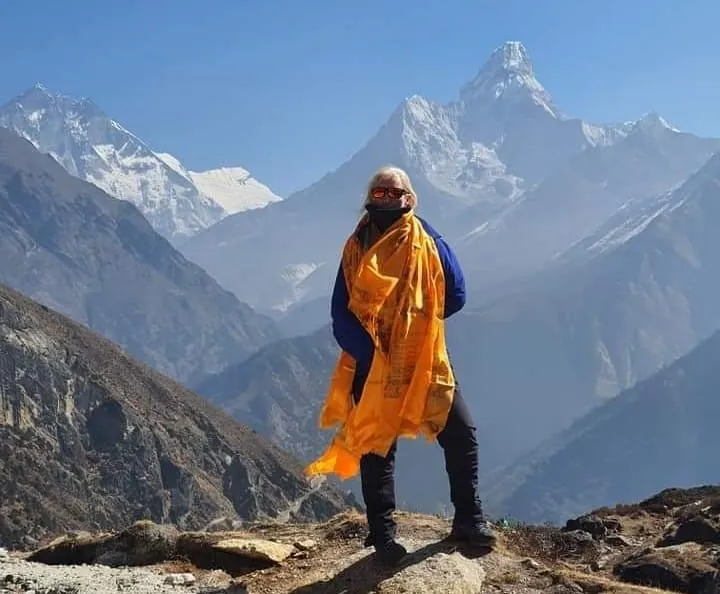
My sourcing takes me from high-altitude mountain ridges to remote islands such as Nguna and Malekula in Vanuatu, where I source tamanu. On these islands, harvesting provides a vital income and real empowerment for local indigenous families. This is how it works.
1. Selective collection. The local Mamas, the women of the villages, lead the harvest. Only fully ripened nuts that have already fallen are collected, by hand. The trees are never harmed and the ecosystem stays undisturbed.
2. Curing and drying. The raw nuts are laid out on traditional racks for a curing phase that lasts several weeks. This step is a careful balance of time, heat and moisture, and it naturally concentrates the beneficial compounds in the nut.
3. Hand cracking. Once dried, the nuts are cracked by hand by the women, using traditional stones rather than industrial machinery. It keeps the process gentle and chemical free, and it respects both their heritage and the natural quality of a wild ingredient.
4. Cold pressing. The cured kernels are then cold pressed. High heat would degrade the oil and destroy the very properties I am sourcing it for. Cold pressing locks them in, so the oil stays pure and potent.
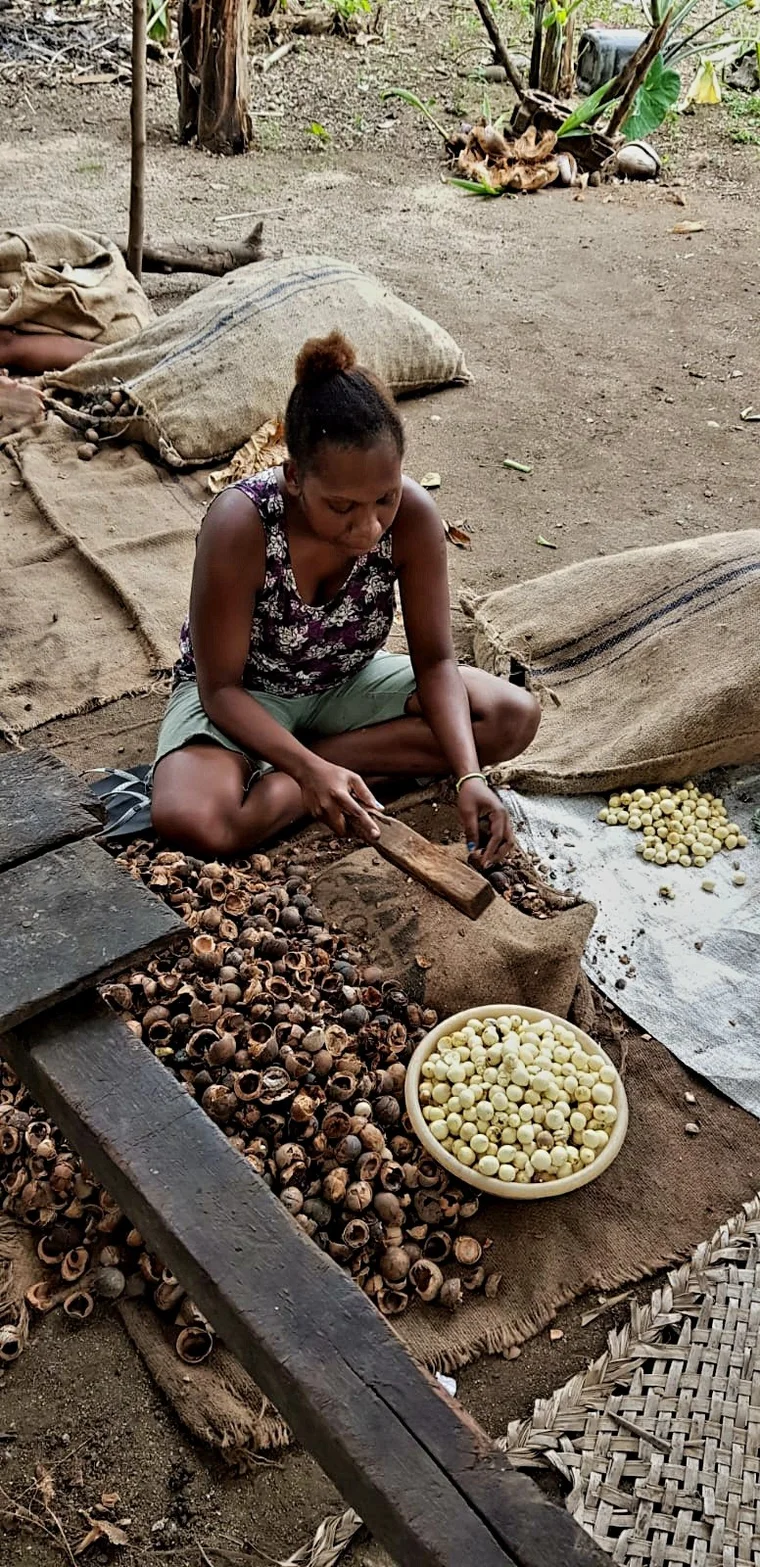
Cracked by hand, shell on one side and kernel on the other. No machinery at any point.
Why I visit every origin
At every origin, I look at the needs of the local people and ask how I can help, both with an alternative sustainable income and with solutions for a better quality of life. I go to every single source, and I set up projects in person.
Sometimes the most useful thing I can offer is education: helping a community understand the true value of their crop and how, with the right guidance, it can change life in a remote island village. It is the old proverb in action. Teaching someone to fish will always feed them for longer than handing them a fish.
Building indigenous projects is not easy. It has taken me many years to earn the trust of these communities, meeting them face to face and delivering exactly what I said I would. I feel very blessed to do what I do. My reward is watching islands that once struggled become thriving hubs that benefit the whole community.
Every order keeps on giving
Everything I do is from earth to shelf, and every customer who orders a product is part of it. Orders are what fund my indigenous projects. They are how projects are built, how they continue and how they grow.
When I plan an expedition, I sit with the elders and the villagers to hear what is really needed, especially after cyclones have destroyed so much.
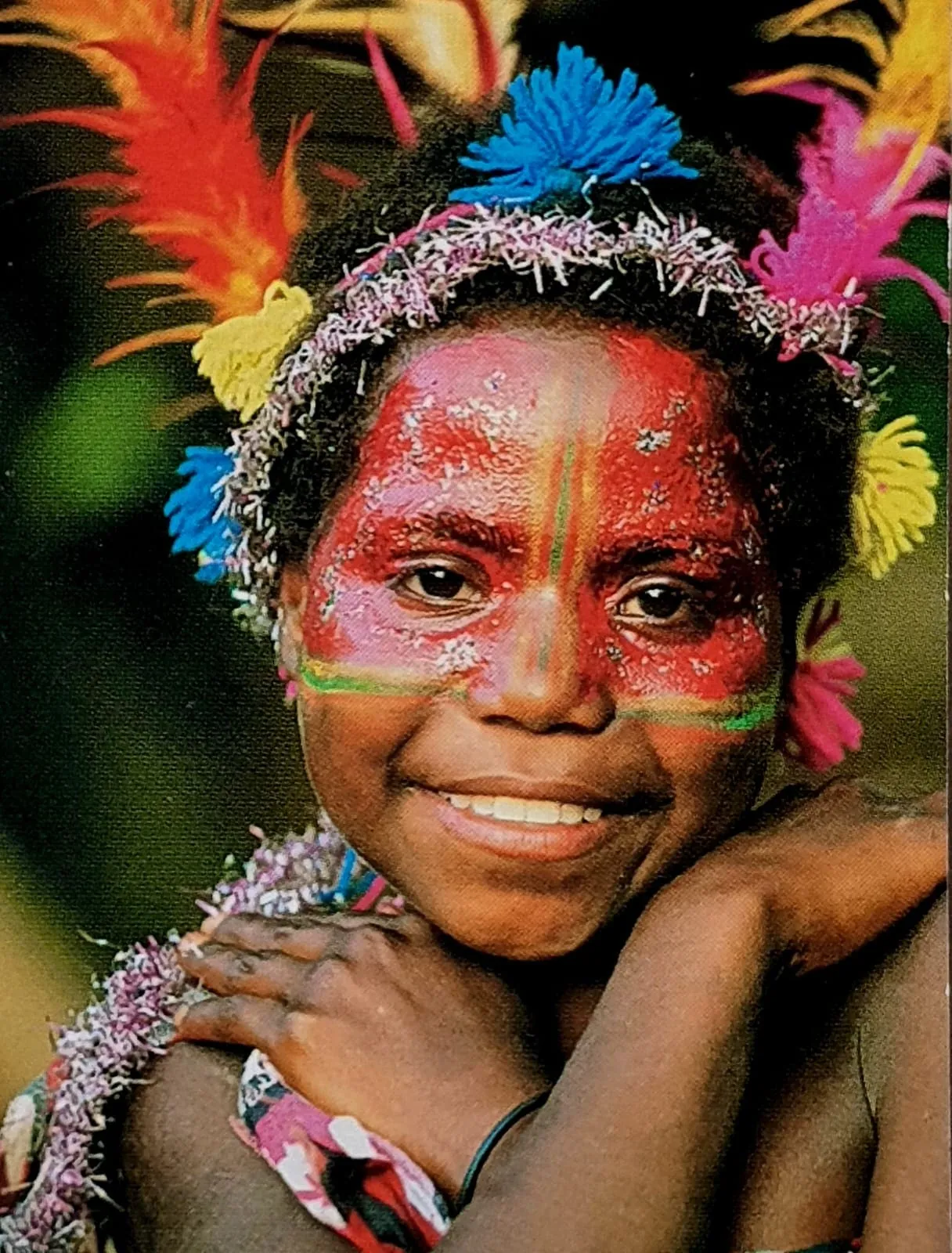
The communities at origin, where every order lands.
My next expedition is to the South Pacific, to a place known as the Island without Water. Being surrounded by water does not mean it is safe to drink. Families collect rainwater but cannot afford filters for their tanks, and it is causing health problems, especially for babies and young children. Your orders will help fund safe drinking water.
The children have asked for footballs, because they love playing together on the beach with their friends. And the elders have asked for children’s Bible storybooks, because for many island children, church and Sunday school are the only places they can learn English.
Giving hope and a future to others is the most rewarding thing you will ever be part of.
Follow my South Pacific expedition to see exactly what your order funds, island by island.
Rebecca