
The word wellness feels modern, but the idea behind it is ancient. The Ancient Greeks had a word for the life they were striving towards: eudaimonia, which translates most closely as flourishing.
The key ideas of wellness, that health should be both preventative and holistic, can be traced back to ancient civilisations in the East, in India and China, and in the West, in Greece and Rome.
A healthy mind in a healthy body
The Ancient Greeks centred their idea of wellness on harmony between mind and body. You will still hear it expressed in Greek today:
Nous ygiis en somati ygiei
- Nous: mind, intellect
- Ygiis: healthy, sound
- En: in
- Somati: body
The saying actually comes to us from Latin. The Roman poet Juvenal wrote “orandum est ut sit mens sana in corpore sano”: you should pray for a healthy mind in a healthy body. Sports organisations still quote it today.
I love that these words are still so powerful. They describe the deep connection between mental resilience and physical wellbeing that I see in every athlete I work with.
To me, wellness is the active, conscious pursuit of choices, activities and a lifestyle that lead to whole-body health.
Going back through history
When I develop a product, part of my research is going back through scripture and history books to see what people used and how they used it.
What I love most is that all they had was whatever grew around them. Nothing made in a laboratory. Only plants and raw materials, wild harvested and organic. Personally, I think in some ways we were better off in the classical period of Ancient Greece, around 400 BC, than we are today.
Ancient beauty rituals that stood the test of time
Many Mediterranean ingredients have lasted thousands of years and are still used today, both on the skin and on the plate: olive oil, honey and herbs.
Olive oil and the strigil. The way the Greeks used olive oil fascinates me. They applied it all over the body and face as protection against the dust and dirt of daily life. The grime clung to the oil instead of the skin underneath. At the end of the day, they scraped it all away, dirt, sweat and oil together, with a curved bronze tool called a strigil. Afterwards they applied a fragrance which, depending on how wealthy they were, might be a blend of herbs and absolute oils extracted from flowers.
Honey. Honey was applied as a raw mask, or mixed with yoghurt, to soothe irritation, clear the skin and hydrate it. Honey has natural antibacterial properties, which is why it has never gone out of use.
Yoghurt. Yoghurt contains lactic acid, which works as a gentle natural peel, lifting dead skin cells. It was also a cooling comfort for skin burnt from long days in the fields. There was no sunblock back then.
Herbal rinses. Rosemary, chamomile and sage were steeped in water to rinse the hair, boost circulation in the scalp and add shine. People still use this combination today to nourish the scalp.
Milk baths. Bathing in milk was a luxury for the wealthy. The most famous bather was Poppaea, wife of the Roman emperor Nero, who was said to bathe in donkey milk to keep her skin soft. Honey and lavender were added to the bath for even softer skin.
The Roman love of perfume
Like the Greeks, the Romans adored perfume. Among the blends they loved were saffron, almond, rose petals, lilies, myrtle and laurel.
I am going to experiment and recreate this combination. You never know, it might find a home in my collections as a rare new addition.
Trends and influencers, ancient style
Even in the ancient world there were trends and influencers. Aphrodite, the Olympian goddess of love and beauty, set the ideal of femininity and grace for Greek women, and I am sure she shaped many of their beauty rituals.
Aristocratic Greek women prized fair skin and achieved it with white lead and chalk powder. For colour on the cheeks they used rouge made from mulberry juice, red clays and rose or poppy petals, and wine dregs were used too.
The Romans went further. Some of their recipes used crocodile dung, and animal fat and blood were used to tint nails, lips and cheeks. No thank you. I will not be testing that combination.
To mask the smell of all this, they reached for strong, earthy resin perfumes with warm, spicy undertones: frankincense, myrrh, cinnamon and cardamom. Those same resins run through my Treasure collection today.
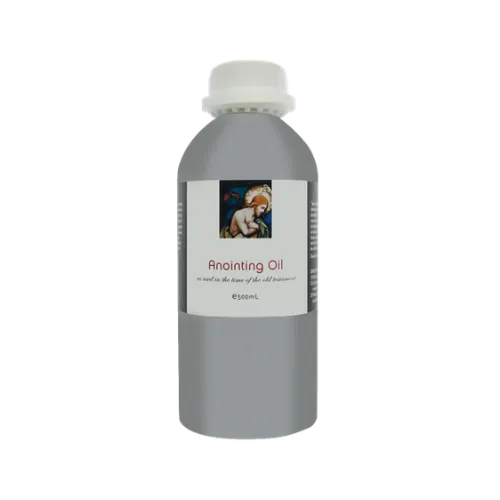
Myrrh, cinnamon, calamus and cassia in olive oil. The same materials, measured the old way.
History inspires me as much as nature
Can you imagine living in Ancient Greece in the classical period? I can, almost. History inspires me as much as the natural world around me.
The difference is that everything I develop today goes through careful research and development, so each product does what it says and gets results. I take what the ancients knew and test it properly.
What’s next?
I am in my happy place, developing something new. Join my newsletter to be the first to hear when my ancient blend is ready.
A gift for my readers: 20% off with code WELLNESS at checkout. Shop the range.
Rebecca