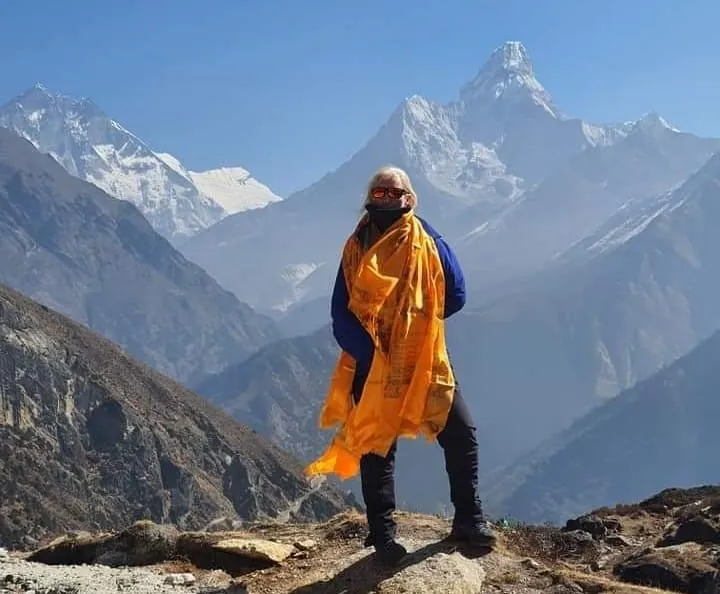
A person who practises wellness does not merely survive. They thrive in life.
There are eight dimensions of wellness, and they hold each other up.
1. Physical
The active, ongoing pursuit of overall body health, far beyond the simple absence of disease or injury. Building strength, stamina and mobility: daily walking, stretching, active sport, or mountaineering that pushes the body to its limits. Fuelling yourself with balanced, wholesome food. Sleep, which is what aids physical recovery and cognitive health. And the self-care of tuning in to what your body is telling you.
2. Emotional
Your ability to understand, accept and manage your emotions, thoughts and reactions as you face daily challenges and navigate change. Bouncing back from setbacks and discomfort, and learning to find your own inner solutions. The mind and body relationship runs through all of it: your physical health and your emotional state influence each other constantly.
3. Social
Building and keeping supportive, healthy relationships. Close bonds with family, friends and colleagues, based on mutual respect. A sense of belonging: being part of a community, volunteering, joining in locally. Communicating well, and listening with empathy. Setting healthy boundaries matters too, and that is not easy for everyone, especially while you are still working on accepting yourself.
4. Intellectual
The active pursuit of lifelong learning, critical thinking and creative problem solving. Reading, puzzles, crosswords, anything that makes the brain focus. A healthy intellect gives clarity and sharpens memory. Your brain's plasticity is its lifelong ability to adapt and change its structure and connections in response to learning, experience and injury.
5. Spiritual
As a woman of faith in the Greek Orthodox Church, my spiritual understanding is the healing and restoration of the soul, rather than emotional comfort or stress relief alone. The church functions as a spiritual hospital that cures the human person through communion with God.
6. Financial
Feeling secure, confident and in control of your money. Understanding your budget, keeping something aside for emergencies, saving for retirement. With the cost of living so high this is not always easy. A daily check of what you have spent against what has come in is a useful skill, and it helps you to think twice before the next purchase.
7. Occupational
Finding joy, fulfilment and balance in what you do. I love my work, and every day is different, which makes it exciting and challenging because nothing is ever the same. Having your own business has its highs and lows, and stresses that are harder to control, because you are the business. If you are employed and feel unmotivated or unrespected, look for other areas to explore: volunteering days, mentoring younger colleagues, teaching your skills to others. That can be rewarding, and it inspires you in the process.
8. Environmental
The connection between your health, your safety, and the sustainability of everything around you: countryside, parks, lakes and forests, and the built-up environments of towns and cities. Air quality matters enormously. I love sea and mountain air. A walk along the shore with salty air, or uphill breathing in crisp mountain air, invigorates me. Sunshine on the skin is comforting.
We all need to be mindful, and keep our environment safe for future generations: sustainable habits, less waste, recycling, composting. In today's fast-paced world, and with the need for ever more, I believe we are going backwards, because we are not taking care of our precious environment. That is the cause of climate change and of more frequent natural disasters. If we all tried harder, and stopped to think about what we are doing, we could slow it down, and everything would be able to breathe clean fresh air and find a sustainable future we can all thrive in.
Rebecca