
When I develop a product, I am not only asking what it does. I am asking how it feels on your skin, what happens the moment you lift the lid and the scent reaches you, and whether the label draws your eye before you even know why. A product has to feel, smell, look and work. Leave one sense out and the whole experience falls flat.
Understanding how our senses work together is one of the most important parts of my job.
It starts in the soil
From earth to shelf really does begin in the ground. The soil an ingredient grows in speaks volumes. It shapes the character of that ingredient, and it changes how it behaves when I blend it with others.
I see this every time I work with sandalwood. I source it from two islands in Vanuatu. On Tanna, it grows in soil rich with ash from an active volcano. On Malekula, it grows in deep jungle soil. Same tree, two very different aromas. I blend the two together to bring out a depth that neither has on its own.
There is a word for this: terroir, a sense of place. Without understanding where an ingredient comes from, you cannot understand its value.
How 30 years of sourcing changed the way I work
When I started out, I would develop a formula first and then scour the globe for the ingredients it needed.
After more than 30 years of sourcing, from high-altitude mountain ridges to remote off-grid islands, I work the other way round. I start with the place. I look at the habitat, the environment and the people who live there. I ask what the land needs to stay healthy and what I can do to support the families who harvest, so the ingredient keeps its integrity and the community gains a sustainable income.
That is how my indigenous projects are built. The ingredient and the people who grow it are never separate in my mind.
We have more than five senses
We grow up learning about five senses: sight, hearing, taste, smell and touch. Modern neuroscience recognises many more, sometimes grouped together as our “sixth sense”. A few of them matter a great deal in my work:
- Proprioception is your body’s internal GPS. Receptors in your muscles, joints and tendons track where your limbs are and how they move. It is the reason you can touch your nose with your eyes closed, and it is a sense prosthetics research works hard to replicate.
- Interoception is your ability to feel what is happening inside you: a racing heartbeat, hunger, pain.
- The vestibular sense controls balance and spatial orientation, and it lives in your inner ear.
- The somatosensory system covers touch, pressure, temperature and body position. Pain itself is picked up through a process called nociception.
As a sports physiotherapist, I work with these senses every day. When you massage a balm into a tired muscle, you are speaking to several of them at once.
How the senses work through the ingredients
Every formula I make has to answer to each sense.
Touch. How does it meet the skin? Many of my balms turn to oil as they warm on your skin, so a small amount goes a long way and sinks in rather than sitting on top.
Smell. Scent reaches us faster than almost anything else. The right blend can lift your mood or calm a busy mind. Each ingredient brings its own character, and my job is to make them sing together.
Sight. Even the jar has to be pleasing to the eye. Every one of my ranges carries its own colour, so you can recognise it on the shelf and in your kit bag.
And it has to work. Beauty without results means nothing to me. Everything I make goes through careful research and development before it ever reaches you.
Vanilla: one ingredient, every sense
Vanilla is one of my favourite examples of nature changing form. It begins life as an orchid flower. Once pollinated, that flower becomes the long pod we know as the vanilla bean.
Inside the pod are thousands of tiny seeds, often called vanilla caviar. They carry the most intense, immediate flavour, and they are edible. The outer pod holds the aromatic oils, which I extract as an absolute for my topical formulas.
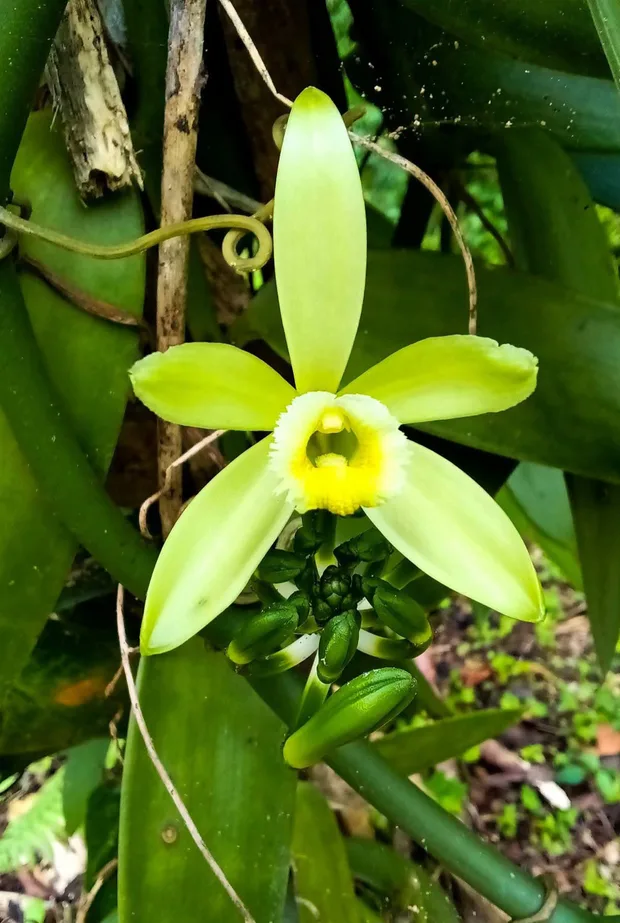
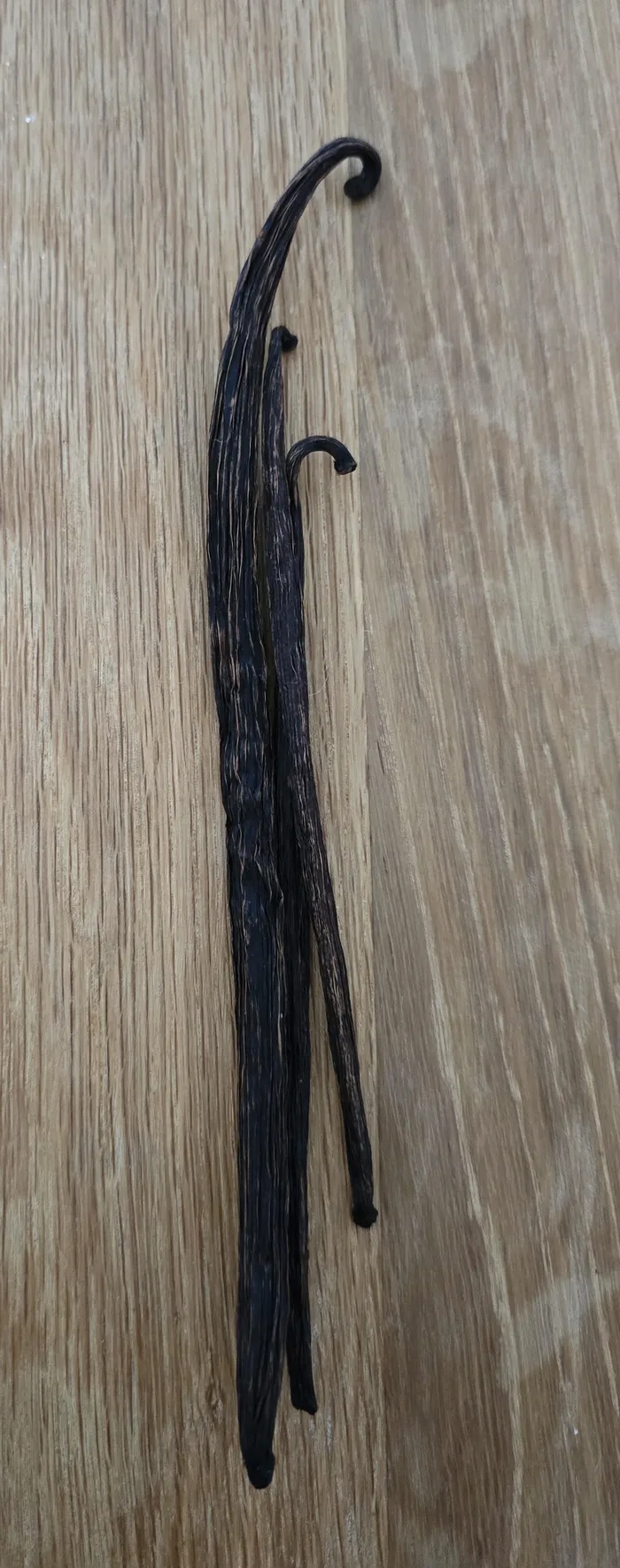
The orchid in flower, and the cured pods: nine months on the vine, three months in the cure.
One plant. Sight in the orchid, taste in the caviar, smell in the absolute, touch in the finished balm. That is a multi-sensory ingredient.
Our senses and our faith
The Bible uses the five physical senses both literally and as a picture of our relationship with God.
In 2 Corinthians 2:15, Paul describes believers as “the pleasing aroma of Christ”. I love that he chose smell, the sense most tied to memory, to describe the experience of God’s presence.
When I read the account of the Last Supper, I see every sense at the table: bread broken and tasted, wine poured, words spoken and heard, the closeness of friends sharing a meal. To me it is a reminder that our senses can be pathways to experiencing God’s love in very tangible ways.
Scent, memory and Wellbeing
Perception is your brain organising everything your senses tell it and weaving it together with your own memories. That is why a single scent can carry you somewhere else entirely.
My Wellbeing balm is built on frankincense, myrrh and pimento. I source the frankincense from Socotra Island, where local families collect the resin from the trees and let it dry in the hot sun. For many people, the moment they open the jar, the warm, spicy scent of frankincense and myrrh brings Christmas flooding back.
That is what I mean when I say a product covers every sense. It looks beautiful, it feels nourishing, it smells of something you love, and it does the job it was made for.
This season, open a jar of Wellbeing and notice what the scent brings back for you. Then tell me. I read every message.
Rebecca